Excited to be getting out and about
This week I decided to go for a trip and visit the church of St James* in Haslingden Lancashire. I had been finding lots of records of Barnes family in the 1800s from there courtesy of the MyHeritage database access for GSV Members. (see below).
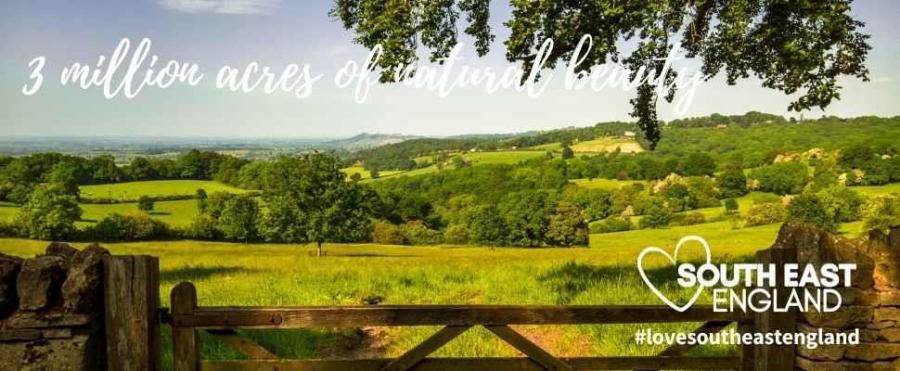
'Exciting to be getting out' I thought, so I drove up from Manchester and got off the motorway on to the A680. Shortly I entered the valley village of Haslingden nestled between the high moors and the Forest of Rossendale to the east. After some to-and fro-ing I could see the way up a side street to the church gates on the hill. It was great to see it and also great to get out after a few weeks of 'iso'. From the air I had seen the little cleft in the moors to the west that had enfolded the old village of Grane and Blackhill Farm where my ancestors had probably been for centuries. So I thought I would turn up Heap Clough, a small side road and have a look on the ground. I could see up the old track, so I stopped, got out to walk - and fell into a black void of undocumented nothingness. Google Street View© hadn't been there.
***
Good news for GSV members. More databases can be accessed from home, Jenny Redman, GSV President announced this week.
'I hope this finds you virus-free and well, with plenty of time to continue your family history research. We are pleased to be able to tell you that we now have access to two more databases for you to use from home. This is in addition to the access we already have to MyHeritage.
The library versions of findmypastand TheGenealogistare now available for GSV members only. Instructions for accessing these databases can be obtained by logging into the members area of the GSV website. Allow time for these instructions to be received as emails are replied to between 10am-4pm on Monday to Friday.Please note that members cannot use any personal subscription to findmypastat the same time as using this library version. Also note the 20-minute time limit and the need to logout when using TheGenealogist.
For those less familiar with the content of the major databases there is a very good introduction at https://www.rootstech.org/video/comparing-the-genealogy-giants?lang=eng
This is a video link to Sunny Morton’s talk 'Comparing the Genealogy Giants: Ancestry, FamilySearch, findmypast and MyHeritage'at the London 2019 RootsTech conference.Sonny’s basic message about finding which records are on which site is to look at the Catalogues at each site (subscriptions not necessary).
findmypast has good Irish record collections, 1939 census, maps and extensive UK parish records (many quite early and not available elsewhere).
Unfortunately the video does not include TheGenealogist, a good UK-based site for census and parish (especially non-conformist) records, tithe maps, war and many other records.
I should also remind you that the free “Quick Lookup” service for members is still available despite the GSV Centre being closed.
Enjoy your researching and stay safe,
Best wishes,
Jenny Redman, GSV President
***
Where will you go next week?
Me? I've got to write up this week's trip and the story of the Barnes of the Rossendale Valley first.
* No doubt eagle-eyed readers picked up that St Chads was incorrect, that is in Rochdale and also Poulton-le-Fylde. Of course.
***

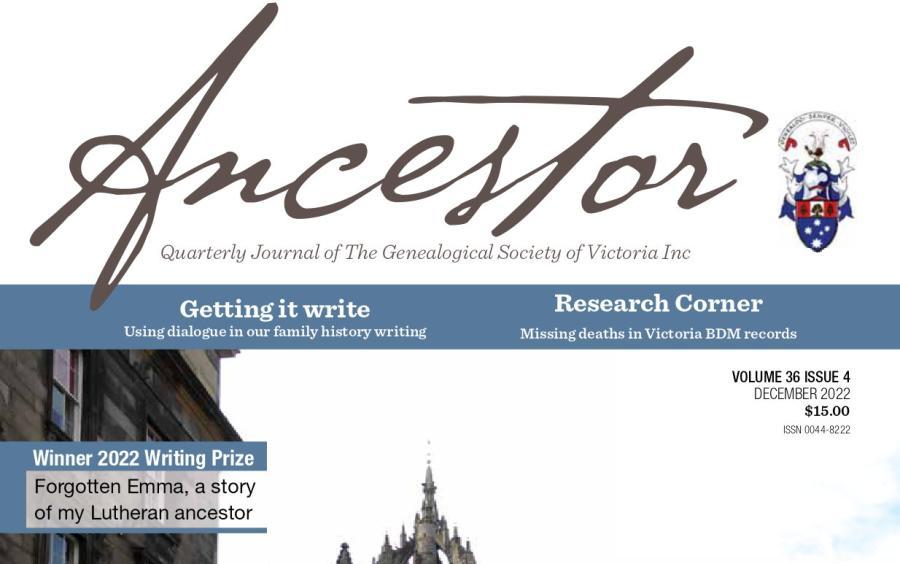
Our current edition features the winning article from the GSV Writing Prize, which is ‘The mystery of the extra Booth Hodgetts’ by Susan Wight. Other articles include an account of a medical orderly in the 3rd Light Horse Field Ambulance in the First World War; the story of an unmarried mother in 19th Century Scotland, and Paul Magill's intriguing story of the bureaucratic goings-on of two men, John Lanktree and Matthew Jackson, who migrated to Australia and were appointed to senior positions overseeing the building of the Yan Yean Reservoir. Jennifer MacKay relates the story behind the ‘The children in the lockup’ sculpture commissioned by Moonambel Arts and History Group to commemorate an event from 1896, and how, with the help of the GSV, she was able to trace a descendant of one of the children.
Professor Linzi Wilson-Wilde OAM has over 25 years’ experience in forensic science working for Victoria Police, New South Wales Police, the Australian Federal Police, and the National Institute of Forensic Science, where she was Director. During her career, Linzi has worked on the investigation of high-profile murder cases, cold case reviews, a mass DNA screen, along with legislative reform, and policy development. Linzi coordinated the DNA analysis of all samples involved in the disaster victim identification and criminal investigation of the Bali Bombing in October 2002. Most notably, Linzi has received a Medal in the Order of Australia for her work and was inducted into the Victorian Honour Roll of Women in 2014.