
Family History Matters 
 The blog of the GSV 

GSV News

GSV News

The First Five GSV Events of Winter

Rodney VAN COOTEN
Expiry Date

As the winter weather sets in this week, perhaps you can spare an hour or two to join one of the next five GSV events. Each session is held via Zoom. You can register to attend any of these sessions until 10 minutes before the session via the GSV Events page. To access this page, search "GSV events" or visit https://www.gsv.org.au/current-and-upcoming-events.

Tonight - Tuesday 27th May

7:30pm England and Wales Discussion Circle

Continuing the theme of researching military ancestors, this session looks at researching those in England and Wales who served in, or were affected by, 20th Century conflicts.

Tomorrow - Wednesday 28th May

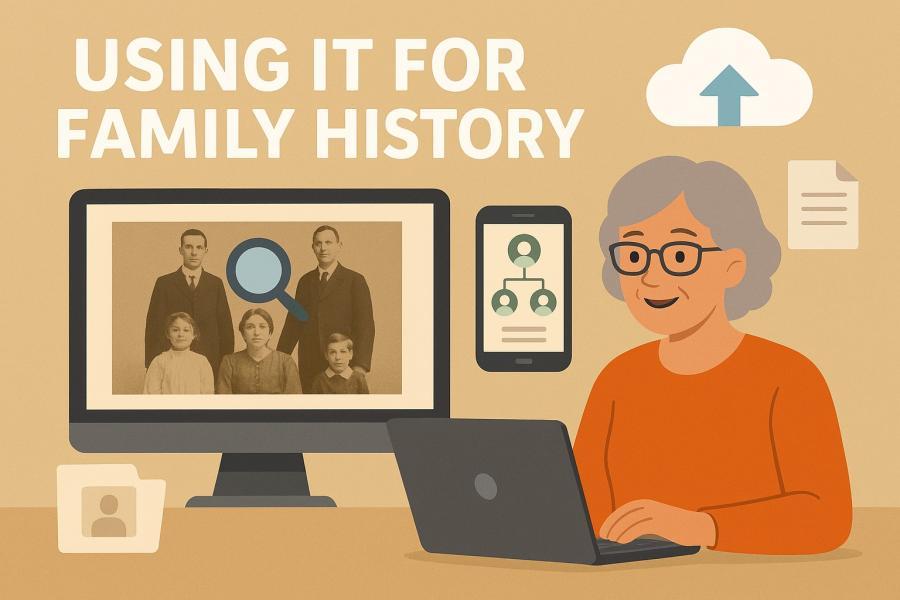
10:30am Family History Tips and Tools

State by State: Researching Family History in New South Wales using resources held by the Society of Australian Genealogists

While they help us research our family history no matter from where in the world we hail, local genealogical societies also develop expertise in researching the local area.  State by State: the genealogical resources of Australia gives GSV members a chance to hear from representatives of the state based societies around Australia. Presenters will highlight the special resources in their society's collection and answer questions about researching ancestors in their area.

On Wednesday 28th May Gemma Beswick and Vanessa Cassin, of the Society of Australian Genealogists (SAG) will speak on ‘Researching Family History in New South Wales’. Of particular use to anyone who had ancestors who lived or worked in colonial Australia, Gemma and Vanessa’s presentation will outline the unique resources such as early parish registers and cemetery transcripts offered by SAG. In addition to their archive of unique materials that have been collected since the 1940's, the Society has an extensive collection of books, microfiche, journals and other family history resources in their Library. Come along to learn about our sister family history society in New South Wales.

Tuesday 3rd June

10:00am DNA Study Group

Our discussion circle for intermediate to advanced genetic genealogy users meets each month. It is a self-help group for people who are familiar with DNA terminology and available software tools, and who would like to work in a small study group where participants meet to continue to hone their skills in genetic genealogy. Participants need to have completed the GSV DNA for beginners classes or have a similar knowledge base.

Wednesday 4th June

12:30pm GSV Writers Circle

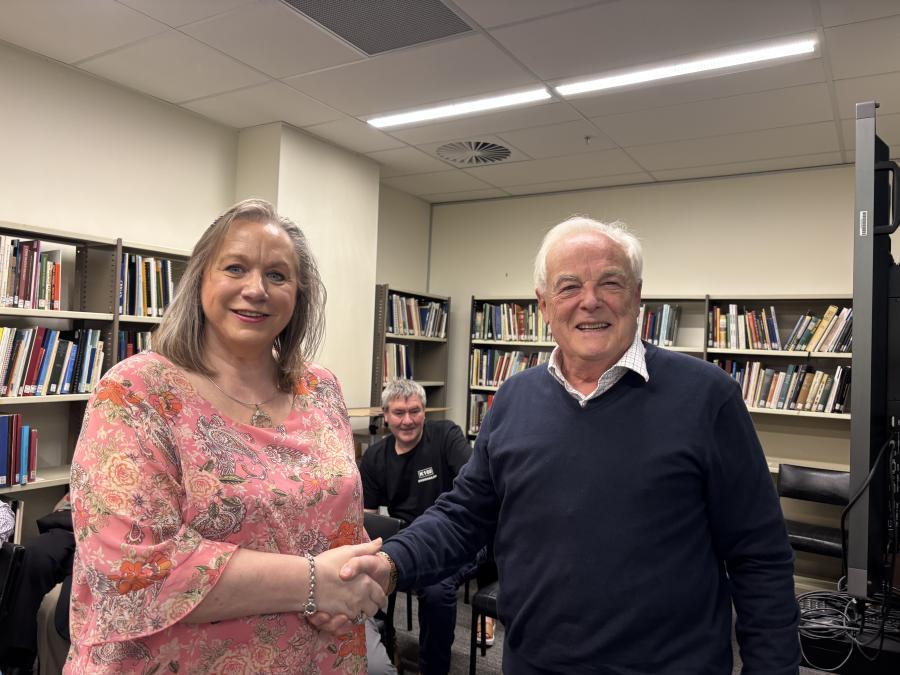
In this month's meeting, Penny and Margaret will give you some tips on writing for interest and clarity so that your story will sparkle. Creative conversation will be led by Jenny and Clare. Clare will highlight some of the resources available to us and I will lead the following discussion: What would you like to include in your family history? Where have you found resources? What has stopped you including indigenous history in the past? These are just a few of the question we may discuss, so come ready to discuss this important topic.

Thursday 5th June

7:30pm Welsh Research Discussion Circle

Please note a change of speaker and discussion for this evening meeting:

David Rowlands will talk about some of his ancestors who immigrated to Victoria, bringing Welsh influence with them. David gives us the following enticement:

"On a huge plaque in the stairwell of the Trades Hall building in Victoria Street are the names of the Pioneers of the 8 Hour Day in Melbourne: Welshmen James Stephens and Scotsman James Galloway. Also listed are the founders of the movement, including my g-g-grandfather Freeman Manuel, born in Flintshire, Wales.

Freeman's family came under the patronage of Augusta Hall, known as Lady Llandover, of Monmouthshire, Wales. Lady Llandover is celebrated as a promotor of the Welsh language, literature, the triple-harp and Welsh costume. Freeman's brothers were known as the "Child Prodigies of Llandover".

Emigrants from Wales brought their own unique skills and background to a new life in Australia."

As part of his talk, David will seek your assistance to attempt to tie some of these loose ends together.

An introduction to the Encyclopedia of Australian Science and Innovation

Stuart MINETTI
Expiry Date

When: 15 May 2025 10:30am
Where: Zoom
Who: Ken McInnes, speaker
How: GSV members can register to attend at www.gsv.org.au/events


The Encyclopedia of Australian Science and Innovation EOAS is a register of the people, industries, corporations, research institutions, scientific societies, awards, major events and organisations that have contributed to Australia's scientific, technological, engineering and medical heritage. Each entry has references to related archival materials, museum objects and collections, and to bibliographic resources, including historical and current literature.

Exploring the Encyclopedia, you can discover the role people and organisations have played in transforming science into processes, objects, buildings, and products that have influenced our lives and have contributed to the development of our nation. You can find out about where these people worked, who they worked with, what they worked on and what they achieved.

The Encyclopedia currently includes about 95% of the key people and organisations involved in science since colonisation. It is open-ended, it is continuously evolving as new information is added and gaps are filled, and it is published online as a revised consolidated edition on a quarterly basis.

This presentation will explain how the Encyclopedia has evolved since 1985; how it can provide a context for family history research; how 'behind-the-scenes' indexing and digitisation is helping our research; how family history research skills and knowledge have helped refine and expand the Encyclopedia; and how you can use it and help improve it.


The speaker:Ken McInnes

Ken McInnes has been researching family history and engineering history and heritage for five decades and has served on many related statutory, professional and community organisations including: VicGUM; Historic Buildings Council of Victoria; Engineering Heritage Victoria (past chair); Engineering Heritage Australia (past chair); and National Trust Bridges Committees.

His professional career as a civil, environmental and computer software engineer included senior roles in major consulting engineering practices, state Public Works Agencies, and at University convening and lecturing subjects on internet and web technologies. Now retired, he is an Adjunct Research Fellow, at Swinburne University of Technology, focussed on researching and adding biographies of engineers, their related organisations and works into the “Encyclopedia of Australian Science and Innovation”.

War service records and stories

Stuart MINETTI
Expiry Date

Taken in Cairo, Egypt in 1916, this photo shows Australian, New Zealand and British troops mingling together at the ANZAC Hostel as they mark the very first ANZAC Day.  The Gallipoli campaign had ended three months before. I wonder how many of these unknown soldiers were veterans of that battlefield. Perhaps the ANZACs were new arrivals on their way to the Somme. I also wonder if any of my ancestors were in that crowd. 

If you have pondered where or when your ANZAC or British ancestors served, our Discussion Circle sessions in late April and throughout May, may give you a chance to find or share the answer. Five of our Discussion Circle sessions will examine resources for exploring military service or offer opportunities to share about our ancestors who served. The convenors of each of these sessions encourage members to volunteer to share their ancestors’ service stories and the lessons we learned while researching them. 

To find out more about any of the sessions below and to learn how to volunteer, visit the GSV Events page at www.gsv.org.au/current-and-upcoming-events.    


24 April:
    10:30am London and South-East Counties Discussion Circle:
Clare Claydon will share about her maternal grandfather’s service in northern Greece in WW1 and attendees are invited to share as well.
     7:30pm VicTas Discussion Circle:  Share stories and remember our wartime VicTas ancestors

2 May: Early English Discussion Circle: Researching English and Welsh Pre 1800s military service

9 May: England and Wales Discussion Circle: Researching English and Welsh 19th Century Military service

27 May: England and Wales Discussion Circle: Researching English and Welsh 20th Century Military service


Rebecca Landy

Why do we have author guidelines?

Stuart MINETTI
Expiry Date

How many times do you read a newspaper or book and pick up inconsistencies? How does it make you feel about the publication? It’s not just grammar, spelling and punctuation that are important.
Author guidelines help to make writing consistent (especially when there are multiple contributors as is the case with the GSV Ancestor journal). Without an agreed approach to the expression of numbers, dates, addresses and use of capital letters, the publication looks less professional.
Guidelines for references are more complex but essential to standardise the way that authors cite sources of information. The GSV Ancestor team has carefully developed, and recently updated, referencing guidelines that aim to provide the information a reader needs, while not taking up too much page space. These can be accessed online at
GSV author guidelines.
The new additions include referencing vital records such as births, deaths and marriages (BDMs) and church records, as well as clarification about referencing websites and blogposts.
Consulting these guidelines is recommended before you start writing, particularly if you are considering entering the 2025 GSV Writing Prize competition that opens this week, or submitting an article to Ancestor.

Researching Family History in South Australia

Rodney VAN COOTEN
Expiry Date

While they help us research our family history no matter from where in the world we hail, local genealogical societies also develop expertise in researching the local area. State by State: the genealogical resources of Australia gives GSV members a chance to hear from representatives of the state based societies around Australia. Presenters will highlight the special resources in their society's collection and answer questions about researching ancestors in their area.

We begin on Thursday 10 April with South Australia. Helen Livingstone, of Genealogy SA will speak on ‘Researching Family History in South Australia’. Of use to anyone who had ancestors who lived and worked in South Australia, Helen’s presentation will outline the resources and expertise offered by Genealogy SA. In addition to many online digitised resources, including historic SA birth, death and marriage records, the Society has an extensive collection of books, microfiche, journals and other family history resources in their Library. Come along to learn about our sister family history society in South Australia.

This members only event will be held via Zoom on Thursday 10 April, 1:30pm -3pm. Members can register to attend here.

Researching women for Women’s History Month

Rodney VAN COOTEN
Expiry Date

I’ve ‘grown up’ knowing Louisa Garrett nee Lewis (1845-1917). She is my 2 x great grandmother and her photo has been on the wall of each house my parents have lived in. Mum has always felt an affinity with her as she believes she looks like her - she does. But there the similarities end!

Louisa is unlike many of our women ancestors. She has been relatively easy to research. Her arrival in Australia was widely publicised. She was a ten year old with her mother and siblings on the Schomberg that was shipwrecked off the west coast of Victoria. She married at barely eighteen years old. Her husband was quite the socialite and so they featured in the social pages. Louisa’s niece was Emily Charlwood who wrote under the pen-name of Celia, and was the social editor of Table Talk. They travelled ‘back’ to England for a visit. Then her husband had a well publicised insolvency trial and they up and moved to Sydney. Her husband died in Sydney and she returned to her family in Melbourne with her children, and pregnant with the sixth. Her whereabouts were recorded in Melbourne directories, rate books and electoral rolls.

Perhaps you have been this lucky researching your women ancestors? Please come along with a short story to share with the VicTas discussion circle on Fri 28 Mar at 10.30am on Zoom. We’d love it if you could share what resources helped you.

It would really help us if before the meeting you could indicate your intention to share something via email victas@gsv.org.au. Don’t forget to register under the Events tab.

Jackie van Bergen
Convenor
Victoria and Tasmania Discussion Circle

A treasure trove of love letters

Rodney VAN COOTEN
Expiry Date

Valerie Britton-Wilson: GSV’s British in India circle’s guest speaker on Tuesday 18th March at 7:30 pm.

I think many Family Historians fantasise about discovering a suitcase containing a trove of one’s ancestors’ love letters! Melbourne-based author, Valerie Britton-Wilson did just that. And to add to the interest, Valerie’s forebears include French, Irish, Italian, British and Indian lines.

In her book, “A Touch of India”, Valerie tells the story of her mother, Pearl, a young Anglo-Indian woman, determined to become a journalist, in Bombay (Mumbai) towards the end of the second World War.  She met, and ultimately married, a Chindit officer who was on leave from the extraordinarily dangerous and challenging fighting behind the Japanese lines in the jungles of Burma.

Eventually Valerie’s parents migrated to Australia and had to negotiate around the remnants of the White Australia policy.  Valerie herself became an academic, but a trip to India in the late 1990s aroused in her a fascination with that country.  She started a textile and clothing importation business, bringing Indian clothes and fabric, with all their charming irregularities, to the Australian market.

Valerie has continued her love affair with India and has very interesting insights into what is happening in modern India and its colonial past. She will be talking about a very recently completed trip to India as well as her book, “A Touch of India: Chutney Mary, Charming Irregularities and an Unlikely Romance” which is available to view in the GSV library.

Valerie’s talk will be of interest to those interested in India, tourism, textiles, family history (aren't we all?), religions, caste, and what it meant to be an Anglo-Indian.  She herself is a perceptive and amusing storyteller. Don’t miss this opportunity to hear her story with the British in India circle on Tuesday 18th March at 7.30 pm. Simply go to the Events Registration page and sign up!

Clare Claydon

Convenor
British India Discussion Circle

Join us at our first seminar for 2025

Rodney VAN COOTEN
Expiry Date

Driven by troubles or drawn by hope? A journey of grand adventure or one of trials and tribulations? Travelled alone or with their community? Do you know what your ancestors' migration experience was like?

How do you think you got here? Immigration to Victoria in the Nineteenth Century is a seminar examining the motives, mechanics and experience of immigrating to the Colony of Victoria in the 1800s.

The one day seminar will be held at the Docklands Library between 9am and 4pm on Saturday 29 March.

Professor Dianne Hall of Victoria University, historian Dr. Liz Rushen, and panels of family history researchers will address the questions:

Why did they come?
What schemes brought migrants to Australia?
What happened on the voyage?
What did immigrants experience on arrival in Melbourne?
What resources are available at the Immigration Museum, PROV, SLV, TROVE, FHC and GSV to help you discover what your ancestors experienced?

Tickets cost $70 for GSV or Family History Connections members and $90 for members of the public.

For more information or to book, visit https://www.gsv.org.au/how-do-you-think-you-got-here

How do you think you got here? Immigration to Victoria in the Nineteenth Century is a joint venture of the Genealogical Society of Victoria and Family History Connections.

Image Information:
Chevalier, N. (Nicholas). (1863). EMIGRANTS LANDING AT THE QUEEN’S WHARF, MELBOURNE. [picture]. Melbourne: Ebenezer and David Syme. State Library of Victoria

DNA course beginning 12 March

Rodney VAN COOTEN
Expiry Date

If you have tested your DNA with Ancestry and wish to learn some basic techniques for effectively working with your match lists to confirm your family tree and solve its mysteries, then we have the course for you.

The seven session course Using DNA for Family History will begin on Wednesday 12 March 10am-12pm and continue monthly from May to October. Meeting over Zoom, Maureen Trotter will lead sessions providing ample time for questions and discussion. The course will cover:

  1. Exploring our DNA results
    • the genealogical treasures included with our Ancestry DNA results
    • how to navigate and make sense of the information
  2. Shared Matches: Our Connection to Cousins
    • how shared DNA, relationship estimate tools and family trees can help us work out relationships to matches
    • what to do if our DNA results reveal unexpected relationships.
  3. Clustering DNA Matches
    • learn two easy methods of organising your DNA match list to group related people
  4. Research Objectives and Tree Building
    • using specific research objectives to help us focus on the relevant cluster of matches
    • how to set up a private and unsearchable research tree for your matches and find connections
  5. Confirming your Tree and Solving Mysteries
    • how to solve more complex family mysteries using all of Ancestry’s hints systems, including Thrulines, building research trees and charts
  6. Digging Deeper
    • investigate some of the innovative tools and techniques developed to enhance our DNA research, including uploading to other sites, keeping track of matches with multiple kits and across different companies
  7. Sharing your progress
    • the possibilities for sharing your findings should you choose to
    • Discussion of our progress so far

The course is run as a progression of classes which should be completed consecutively, but can be taken as one off events for those who need a refresher on that topic.

Each session will cost $20 for members and $40 for non-members.

To register for the first session visit here.


She would prefer him for a husband to any other person in the colony

Rodney VAN COOTEN
Expiry Date

Nearly 3000 single, free women arrived in Australia in the 1830s in response to enticing advertising and a scheme to encourage women to migrate. At least a quarter of these women are known to have married convicts.

On Thu 27 Feb at 1.30pm, Dr Liz Rushen AM will discuss why so many of these free women married men still under sentence.

This will be a hybrid meeting for GSV members only. When you register you should indicate whether you will attend by zoom or in person. The venue is the Kathleen Syme Library, 251 Faraday St, Carlton.

Dr Liz Rushen AM is a Research Associate in the Faculty of Arts, Monash University, on the Editorial Board of the Australian Dictionary of Biography and a Director of the Melbourne Maritime Heritage Network. She is also a member of the Professional Historians Association (Vic & Tas), a former Executive Director of the RHSV and former Chair of the History Council of Victoria. She has researched and written extensively on the experiences of nineteenth century migrants, particularly those who left Ireland. In 2021 Liz was appointed a Member of the Order of Australia for significant service to community history and heritage preservation.

The Convicts and Transportation Discussion Circle meets quarterly and is free as part of a GSV membership.

You can register your intention to attend here or via https://www.gsv.org.au/events.